Project Objetives
The LIFE Memory project, propose to demonstrate at an industrial prototype scale an anaerobic technology, using Submerged Anaerobic Membrane Bioreactor (AnMBR) technology, as an alternative to traditional urban wastewater treatment. This new approach focuses on a more sustainable concept, where wastewater turns into a source of energy and nutrients, and also a recyclable water resource by membrane disinfection.
The LIFE Memory project has three main objectives:
- Reduction of WWTP (Waste Water Treatment Plants) energy consumption by 70%.
- Reducing by 80% of the net greenhouse gases emission per unit of COD removed from the influent wastewater, avoiding the oxidation of organic matter.
- Increase effluent quality for reuse and minimization of residuals by 50%.

AnMBR technology combines anaerobic digestion and membrane technology, for treating urban wastewater at ambient temperatures. Anaerobic digestion allows the conversion of the organic matter into a biogas flow (composed mainly by CH4 and CO2) that can be used at the WWTP to generate heat energy and electric power. On the other hand membrane filtration allows increasing the sludge retention time (SRT) by 100% without increasing the reactor volume, which allows anaerobic processes to be used for low-loaded wastewaters. Low growth rate of anaerobic bacteria coupled to longer sludge retention time reduces sludge production, so that less residuals need to be disposed of, yielding less emissions.
To achieve this main objective, the following activities are proposed:
- Evaluation of the effluent quality obtained as a function of different operating conditions and parameters, in order to find the optimal performance of the prototype.
- Maximization of the net energy production through methane recovery from both liquid and gas phase, improving the overall energy balance of the process.
- Determination of critical design parameters, establishing simultaneously guidelines for an accurate control and monitoring of the process.
- Demonstration of the economic feasibility of the tested prototype and quantification of environmental benefits.
The implementation and the validation of this more environment-friendly process can be replicated at a very large scale in many sites with warmer and more concentrated wastewaters, such as industries or throughout Southern Europe and the Mediterranean, where low precipitation and more expensive water (often gained by desalination) lead to a lower wastewater flow.
The main expected result of this project will be the successful demonstration of the innovative technology that allows maximizing the recovery of energy and resources from urban or industrial effluents. There are three clear outputs:
a) The demonstration of the economics of AnMBR technology for treating urban wastewater.
b) The elaboration of a protocol for the design and operation of WWTPs based on this new technology.
c) The quantification of environmental benefits such as lower energy use, lower GHG emissions, increased potential for water reuse and reduced sludge production.
This technology will contribute to a net decrease in the carbon footprint of the actual WWTP energy system. Not only it will enable to save GWh of energy consumption every year but it will also reduce drastically the CO2 emissions from wastewater by avoiding oxidation and replacing it by the production of biogas for reuse in the process.
Project Actions
The development of MEMORY project is divided into different actions as they are listed below:
A – Preparatory actions:
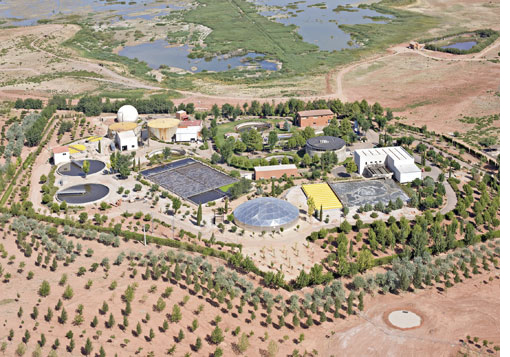
The main objective of this action is to establish the most adequate configuration and location for the demonstration prototype plant.
A.1 – Selection of the demonstrator's site and authorization requests (Finished)
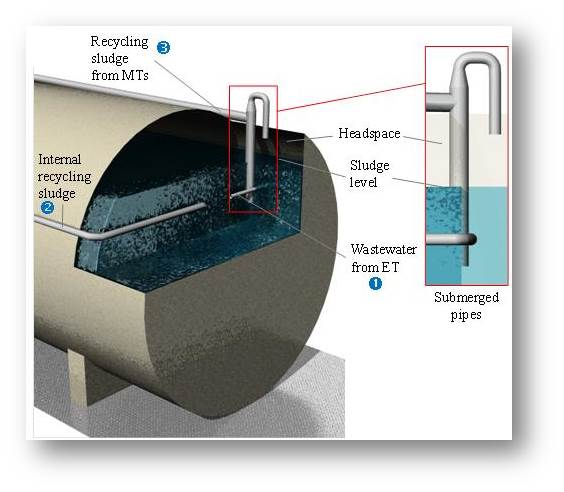
A.2 – Assessment of the prototype configuration (Finished)
B - Implementation actions:
B.1 – Prototype plant design and construction (Finished)
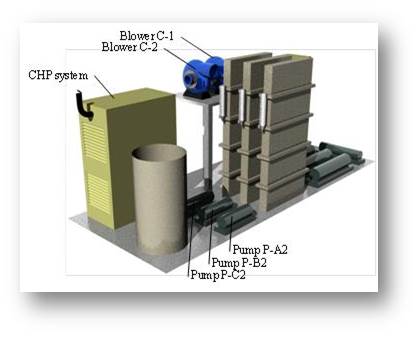
This first implementation action comprises all the activities that are necessary for the construction of the anaerobic treatment demonstration plant and its placement in the selected WWTP: Detailed design of the demonstration plant and Construction of the demonstration plant.
B.2 – Prototype plant implementation and follow-up (Finished)
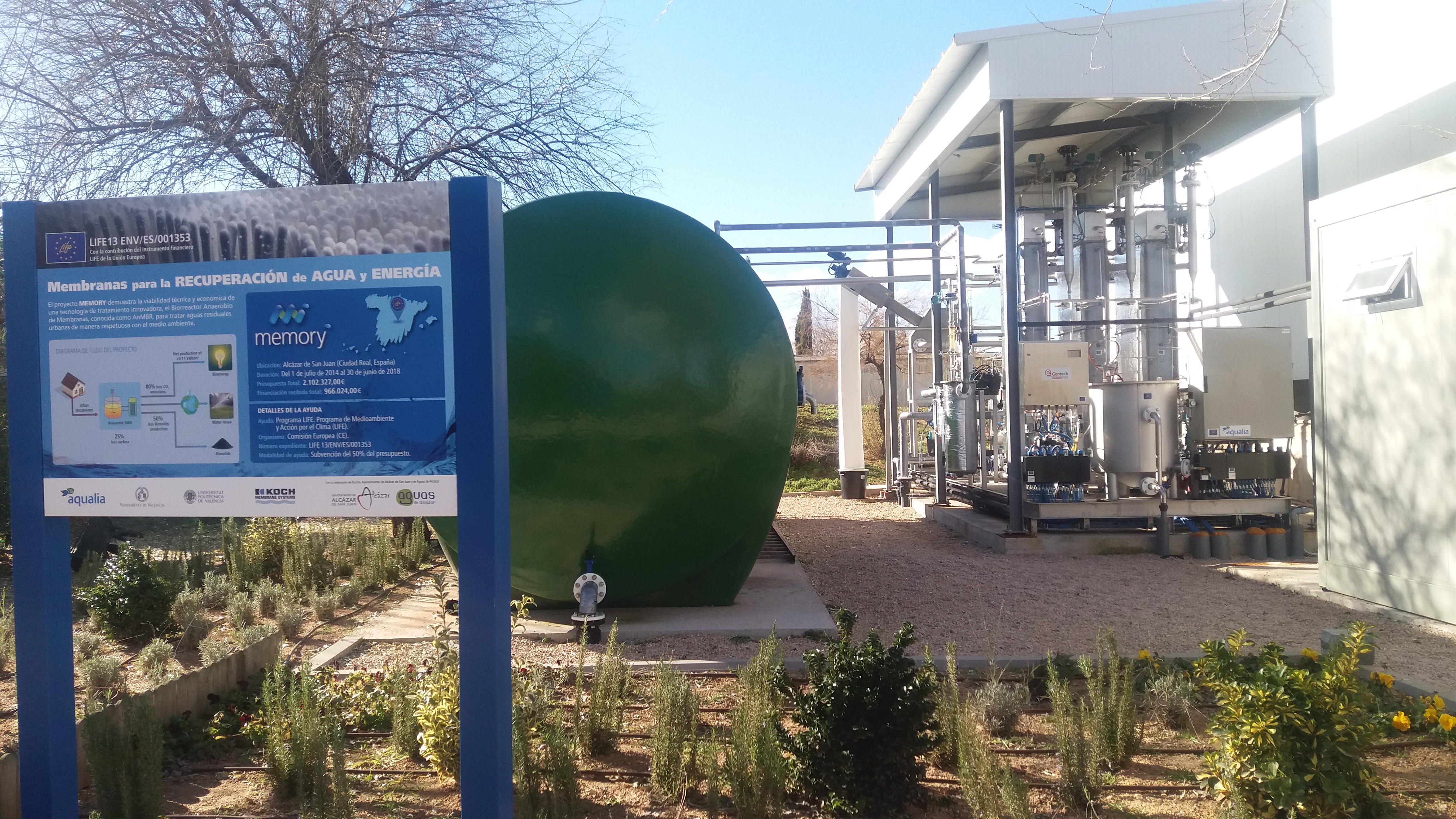
The main objective of this action is to evaluate the overall process performance (focusing on effluent water quality obtained and energy balances) and to test different operation conditions in order to find the optimal performance and critical parameters. Specific aspects of the implication of this technology at full scale will be also studied, such as the importance of methane recovery from the effluent and the biogas use in a CHP system. Finally, different guidelines will be obtained for an optimum design and operation at full scale, as well as for monitoring and controlling the process. This action includes: Process implementation and start-up, Prototype operation, Prototype simulation and optimization, Control systems development and implementation, and Economic feasibility study.
C – Monitoring of the impact of the project actions:
C.1 – Effectiveness of the project actions. Project technical results monitoring (Finished)
The project contains a set of specific actions/tasks/activities to perform unbiased estimations of the impact of LIFE MEMORY in the environmental issue targeted: validation and demonstration of SAnMBR technology application in WWTPs for energy and water recovery.
C.2 – Monitoring the environmental impacts (Finished)
The objective of this action is the monitoring of the equipment and the entire prototype in terms of performance and environmental targets. The activities conducted under this action will indicate if the functioning of the equipment is producing the expected results in terms of energy consumption, related CO2 emissions and carbon footprint of equipment. Any deviation will be carefully analyzed in order to implement the corrective actions in the implementation actions.
C.3 – Monitoring of the socio-economic impact of the project (Finished)
The socio-economic impact will be addressed by analyzing the benefits of the project in terms of employment, economic effects over the value chain and impact on the local environment (neighborhood).
D – Communication and dissemination actions:
D.1 – Project website (Finished)
The objective of this action is the development of a project website that will ensure a dissemination of the project via electronic media with a specific focus on its environmental benefits, both during the project lifetime and after its termination. http://www.life-memory.eu/
D.2 – LIFE+ information boards (Finished)
The objective of this action is the preparation of the LIFE+ information boards providing key information about the project, to be installed at the site of prototype implementation and displayed at other public locations.
D.3 – Layman's report (Finished)
The objective of this action is the issuing of the Layman's report at the end of the project that will report all the objectives, actions and results of the project to the general public and all potential clients of Aqualia.
D.4 – Communication and dissemination actions (Finished)
The objective is to disseminate widely our communication tools in order to maximize the reached audience both during the project's lifetime and after its termination.
Contact with public stakeholders will be made in the frame of proposed conferences and seminars, as well as the fairs and exhibitions, in which representatives of Aqualia, KOCH and Calagua shall participate during the project. These events are chosen in such way, that we will be able to reach a high number of relevant stakeholders for an effective dissemination of the project.
E – Project management and monitoring of the project progress:
E.1 – Overall project management (Finished)
The objective of this action is to ensure a smooth and efficient management of the project during its entire duration from a technical, administrative and financial point of view.
The main objectives are to ensure the achievements of the project objectives within the budget and the time appointed; to define the technical architecture of the project and its consistency throughout the project; to track and report the technical and financial progress and the quality of the work; to ensure the use of the available resources in a structured manner; to monitor the communication with the subcontractors and to follow an efficient dissemination activities.
E.2 – Networking with other projects (Finished)
The objective of this action is to ensure an effective networking with other projects, to a mutual benefit, not only during the project duration but also after its termination. The main objective will be the transfer of knowledge and information exchange with the professionals of the area and of the LIFE+ program.
E.3 – After-LIFE Communication Plan (Finished)
The objective of this action is the definition and implementation of an action plan to pursue the dissemination and communication of the project's results after its conclusion. The main goal is to communicate project's progress and results, which will be of benefit to many industries and municipalities by providing them an innovative solution for reducing the environmental impact, and trigger authorities to reduce pollutant's emissions and enhance water and energy recovery.
E.4 – Audit of LIFE+ expenses (Finished)
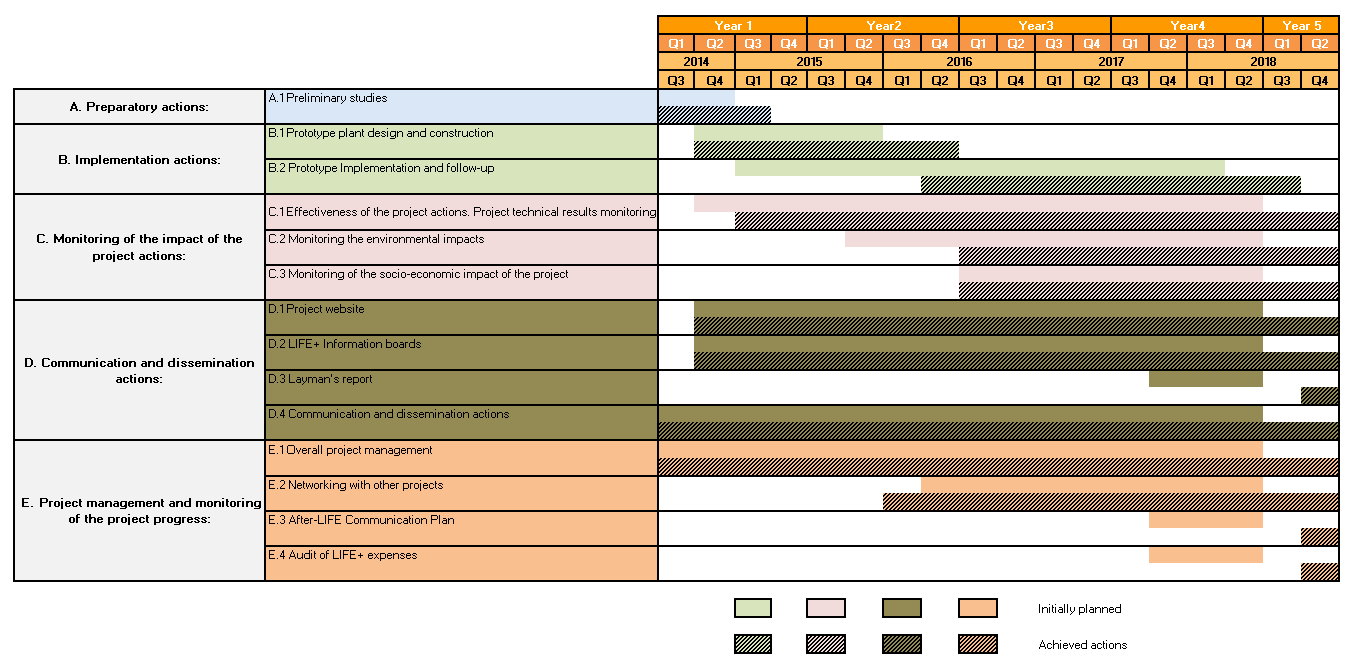
Schedule